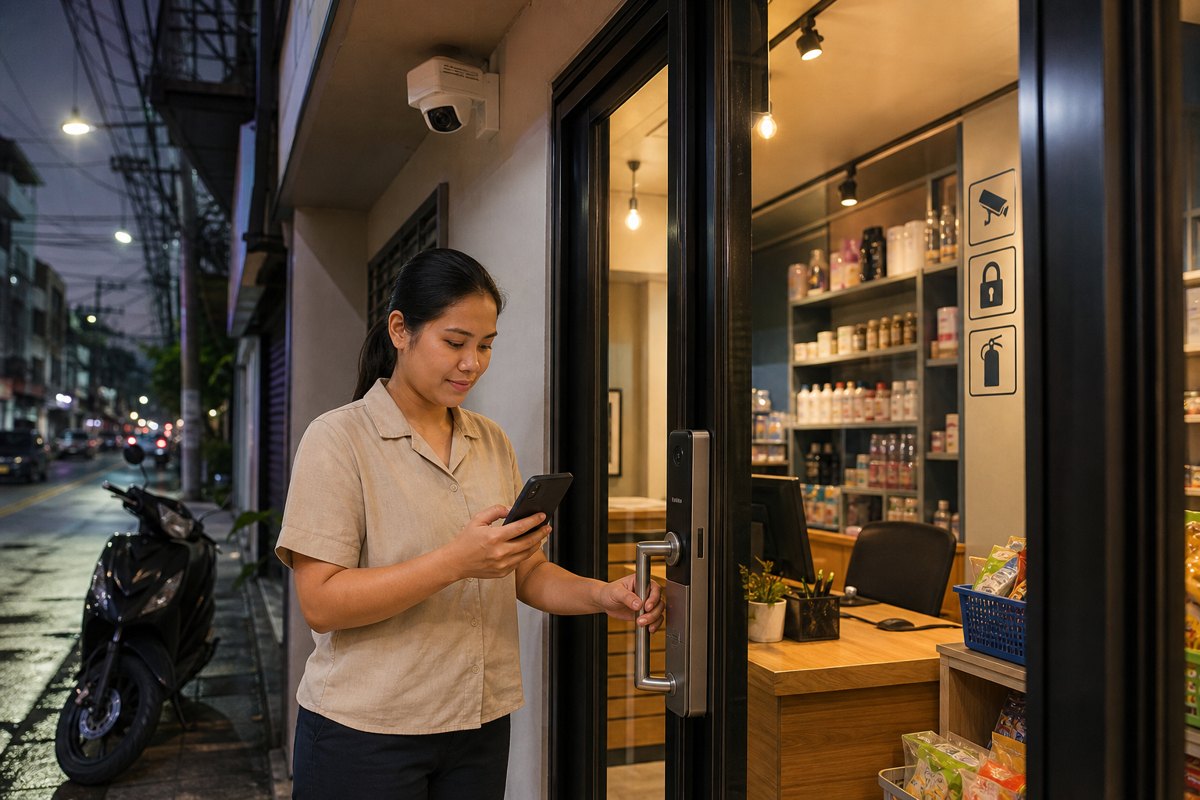
Metro Manila homes and offices are operating in a more demanding environment: heavier rainy-season disruption, more hybrid work, more valuable devices on-site, and higher expectations for uninterrupted service. Security and safety systems can no longer be treated as passive equipment that only matters after an incident. They have become part of everyday operational resilience.
For homeowners, that resilience means knowing that family members, household staff, deliveries, vehicles, and entry points are protected even when schedules change or weather reduces visibility. For office managers and business owners, it means protecting people, assets, records, tenants, customers, and daily operations without creating friction for legitimate users. In both settings, reliability is the real standard: the system must work when the building is busy, when the owner is away, when power fluctuates, and when fast decisions are needed.

Why reliability matters more during the rainy season
Rain does not only create inconvenience. It changes risk conditions around properties. Visibility drops at gates and parking areas. Deliveries and visitor arrivals become harder to screen quickly. Flood-prone access roads can delay guards, technicians, and emergency responders. Power interruptions and unstable connectivity can also expose weak points in CCTV, alarms, access control, and intercom systems.
A reliable security and safety program anticipates these conditions. Cameras should maintain clear coverage in low light and bad weather. Access systems should continue to record entries even when internet service is unstable. Alarm notifications should reach the right people through more than one channel. Critical devices should have appropriate backup power. Most importantly, the people responsible for the site should know what the system is telling them and what action to take next.
Protection is now a continuity issue, not just a security issue
In an office, a security gap can quickly become an operational problem. A failed door controller can delay employees at opening time. A non-recording camera can complicate incident review. A weak visitor process can expose confidential areas. A poorly placed sensor can create false alarms that teams start ignoring. These are not isolated technical concerns; they affect productivity, accountability, insurance discussions, tenant confidence, and management decision-making.
Homes face similar continuity concerns at a personal scale. Families need confidence that entry points are monitored, that household helpers and service providers can be managed responsibly, and that elderly relatives or children are safer when adults are away. The value of the system is not only in deterring theft. It is in reducing uncertainty and providing reliable information during everyday situations: a late delivery, an unfamiliar visitor, a gate left open, a tripped alarm, or an incident at the garage.
What a modern reliable setup should include
A strong home or office safety environment is built in layers. CCTV remains essential, but it should be designed for usable coverage rather than simply maximum camera count. Entrances, exits, reception areas, parking spaces, perimeter lines, stock rooms, server rooms, and cash-handling zones should be evaluated based on actual movement patterns and risk exposure. The goal is clear evidence, fast review, and practical visibility for the people who manage the site.
Access control adds accountability. Instead of relying only on keys or informal gatekeeping, businesses can manage who enters specific areas and when. Homes and residential properties can apply the same principle through video door stations, controlled gate access, and documented visitor procedures. When access records are combined with camera footage, managers gain a much clearer timeline of events.
Alarms, sensors, lighting, and emergency devices complete the safety layer. Motion sensors, door contacts, panic buttons, smoke or environmental alerts, and emergency lighting can reduce response time when something unusual happens. For offices, these systems should be aligned with site procedures: who receives alerts, who verifies them, who contacts responders, and who documents the incident. For homes, the design should be simple enough for family members and trusted staff to use consistently.

Practical examples for homes, offices, and managed properties
Consider a small office in Makati or Pasig that handles client documents and after-hours cleaning. Reliable security means the main entrance, reception, file storage, and server cabinet are monitored; staff and service providers have appropriate access schedules; and management can verify an event remotely without relying on guesswork. If rain delays an employee opening the office, access logs and remote viewing can help managers coordinate safely.
For a home in Quezon City, Parañaque, or nearby residential communities, the priority may be entry visibility, perimeter deterrence, and safer household routines. A well-planned setup can show who approached the gate, whether a package was received, whether lights activated at the right time, and whether alerts were sent when a door opened unexpectedly. The benefit is peace of mind supported by evidence, not constant worry.
For property managers, reliability is even more important because one weak point can affect multiple tenants or families. Common areas, parking, lobbies, utility rooms, and service entrances need consistent monitoring and clear accountability. A system that is easy to maintain, expandable, and supported locally reduces downtime and helps management respond professionally when residents or tenants raise concerns.
Decision-making guidance before upgrading
Before purchasing devices, decision-makers should start with a site review. Identify the most important assets, the busiest movement paths, the most vulnerable entry points, and the situations that would cause the greatest disruption. This prevents under-designed systems that miss critical areas and over-designed systems that are expensive but difficult to use.
Second, evaluate reliability requirements. Ask whether cameras still record during internet downtime, how long backup power should support essential equipment, who can access recordings, how alerts are escalated, and how quickly support can respond if something fails. For businesses, these answers should be documented as part of site operations. For homes, they should be translated into simple routines everyone can follow.
Third, choose solutions that can scale. A family may later add a second gate camera, smart lighting, or additional sensors. An office may expand to another floor, add restricted rooms, or require remote management for multiple branches. Selecting compatible, serviceable, and professionally installed equipment protects the investment and reduces future rework.
The business case: fewer blind spots, faster response, stronger confidence
The return on a reliable security and safety system is not limited to avoiding major incidents. It also appears in smaller daily improvements: faster incident verification, fewer disputes, better visitor control, improved staff confidence, stronger tenant satisfaction, and reduced management time spent reconstructing what happened. For companies, that can mean smoother operations and better protection of sensitive areas. For homeowners, it means a safer, more manageable property.
Reliability also supports better accountability. Clear footage, accurate logs, and timely alerts help owners and managers make decisions based on facts. During rainy-season disruptions or high-traffic periods, that evidence can be the difference between a quick resolution and a costly misunderstanding.
Build security that works when conditions are not ideal
The best time to improve home and office security is before the next disruption reveals a weakness. Metro Manila properties need systems designed not only for normal days, but also for rain, outages, busy schedules, after-hours activity, and remote decision-making. A dependable setup protects people, supports operations, and gives owners the confidence to act quickly when something needs attention.
Infotouch can help homeowners, office managers, business owners, and property managers design practical, reliable security and safety solutions for real-world conditions. If you are planning a new CCTV, access control, alarm, or integrated safety upgrade for a home, office, or managed property in Metro Manila or nearby areas, contact Infotouch to discuss a setup that fits your site, risks, and operational needs.