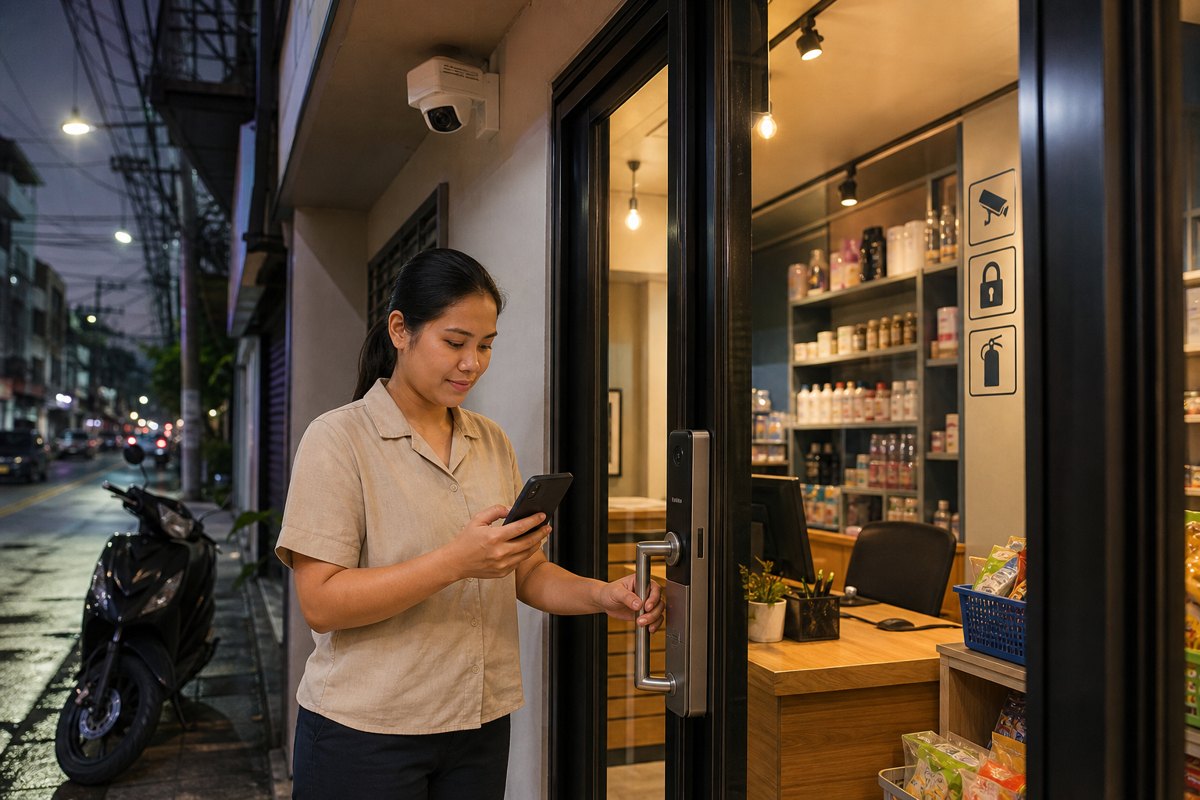
Metro Manila businesses are moving beyond “record and review” CCTV. In 2026, the more urgent shift is toward privacy-ready video analytics: security camera systems that can detect operational risk in real time while keeping data access, retention, and evidence handling under control. For offices, retail branches, warehouses, condominiums, schools, clinics, and mixed-use buildings, this is no longer a technology upgrade for convenience. It is becoming a governance and resilience requirement.
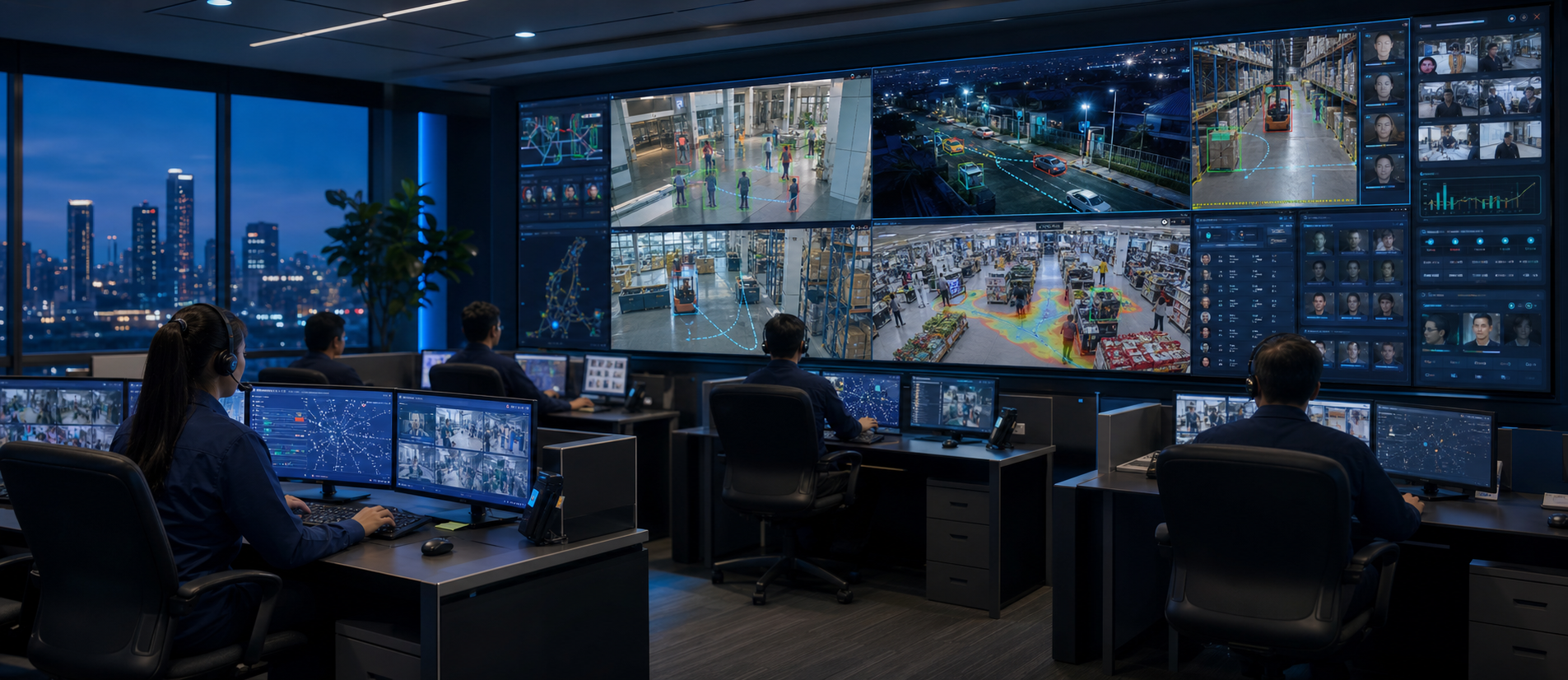
The timing matters. Security teams are being asked to monitor more locations with fewer people on-site, respond faster to incidents, and provide clearer evidence after disputes, theft, safety events, or unauthorized access. At the same time, decision-makers are more conscious of privacy obligations, employee expectations, tenant concerns, and the reputational risk of poorly governed surveillance. The result is a new requirement: CCTV must become smarter, but it must also become more controlled.
Why this trend matters now
Traditional CCTV has a familiar weakness: it records a large volume of footage, but businesses often discover incidents only after damage is done. Reviewing hours of video after a loss, complaint, delivery discrepancy, or break-in is slow and inconsistent. As branches multiply and sites operate longer hours, the gap between what cameras capture and what managers can actually use becomes a business risk.
Video analytics changes the operating model. Instead of relying only on human watching or after-the-fact review, modern systems can flag events such as line crossing, loitering, after-hours motion, abandoned objects, people counting anomalies, tailgating at access points, vehicle movement in restricted zones, or crowd build-up in sensitive areas. More advanced deployments can route alerts to a monitoring team, security desk, facility manager, or off-site operations lead with supporting video clips and timestamps.
What is different in 2026 is that businesses are evaluating analytics together with data governance. Management teams want to know who can view live feeds, how long footage is retained, whether exported clips are traceable, how cameras are segmented from the corporate network, and whether the system can support investigations without creating unnecessary exposure. A camera system that is intelligent but poorly controlled can introduce its own compliance and cybersecurity problems.
The business risks of staying with passive CCTV
For many organizations, the cost of an outdated surveillance setup is hidden until an incident occurs. A retail store may have cameras but still miss repeated shelf losses because the footage is never reviewed proactively. A warehouse may capture gate activity but lack analytics to identify unusual vehicle movement after operating hours. An office building may retain video for too short a period to support a delayed complaint. A multi-site company may have different recorder settings, weak passwords, and no consistent access policy across branches.
These gaps affect more than security. They can increase insurance friction, weaken HR or tenant investigations, slow down incident reporting, and create uncertainty during customer or supplier disputes. In a high-density business environment like Metro Manila, where facilities often combine employees, contractors, deliveries, visitors, shared parking, and leased spaces, unclear video evidence can quickly become an operational issue.
There is also a network security angle. IP cameras and NVRs are connected devices. If they are installed with default credentials, outdated firmware, open remote access, or flat network placement, they can become entry points into the broader environment. A modern surveillance project should therefore include both physical security design and IT security controls.
What “privacy-ready” video analytics looks like
A privacy-ready system does not mean reducing security visibility. It means designing surveillance so the organization captures useful evidence while limiting unnecessary access and ambiguity. For Philippine businesses, this is especially important when cameras cover employee work areas, customer-facing spaces, common areas, lobbies, entrances, elevators, parking zones, and logistics points.
Practical controls include role-based access, named user accounts instead of shared logins, audit logs for viewing and exporting footage, retention rules aligned with business need, camera placement review, documented escalation procedures, and secure remote access for authorized users. Where analytics are used, organizations should define which events are monitored, who receives alerts, and how false alarms are reviewed and tuned.
The objective is to prevent “surveillance sprawl.” Without governance, more cameras and more alerts can create confusion. With proper design, analytics can reduce noise, focus attention on higher-risk events, and make response more consistent across locations.

Operational value and ROI
The strongest business case for video analytics is not simply that cameras become more advanced. It is that the system reduces time-to-awareness and time-to-evidence. A facility manager can receive an alert when a restricted loading bay is accessed after hours. A security supervisor can review a short incident clip instead of scanning a full night of footage. A property manager can compare visitor flow against staffing levels. A retail operations head can use heat and dwell patterns to improve coverage of high-loss areas while maintaining appropriate controls.
ROI can come from fewer unmanaged incidents, faster investigations, reduced manual review, better guard deployment, stronger vendor accountability, and improved continuity during staffing gaps or weather-related disruptions. For multi-site organizations, standardized analytics and retention policies can also reduce the complexity of managing different camera brands, recorders, and remote access methods.
The key is to avoid buying analytics as a feature checklist. Decision-makers should start with the events that create business risk: unauthorized entry, after-hours movement, queue build-up, stockroom access, perimeter breaches, vehicle exceptions, safety zone violations, or recurring disputes. The system design should then map cameras, network capacity, NVR or cloud storage, alert workflows, and reporting around those risks.
Implementation priorities for Metro Manila organizations
A practical upgrade path begins with an audit of the current environment. Review camera coverage, image quality, blind spots, recorder health, retention duration, remote access settings, user accounts, firmware status, and network segmentation. Identify which locations are business-critical and which incidents have caused repeated losses, delays, complaints, or management escalation.
Next, define analytics use cases by site type. Offices may prioritize lobby monitoring, access point activity, visitor flow, and after-hours motion. Warehouses may focus on loading bays, perimeter zones, vehicle movement, and restricted storage areas. Retail locations may prioritize high-value shelves, cashier areas, stockrooms, and queue conditions. Property managers may need common-area visibility, parking entrances, elevator lobby coverage, and incident retrieval procedures.
Finally, align the technology with governance. Establish who owns surveillance policy, who can view footage, who can export evidence, how long recordings are kept, how alerts are documented, and how system health is monitored. For many businesses, the best outcome is a hybrid approach: edge analytics for fast local detection, NVR or cloud-assisted storage for resilience, and secure remote access for authorized managers.
A clear next step
Privacy-ready video analytics is becoming a priority because it connects security, operations, compliance, and business continuity. The organizations that benefit most are not necessarily those with the most cameras. They are the ones that know which risks they need to detect, how alerts should be handled, and how evidence should be protected.
Infotouch can help businesses assess existing CCTV environments, modernize IP camera and NVR deployments, design analytics-ready coverage, secure remote monitoring, and align surveillance systems with practical governance requirements. For Metro Manila companies planning a security refresh in 2026, the right starting point is a site and risk assessment—not another isolated camera purchase.