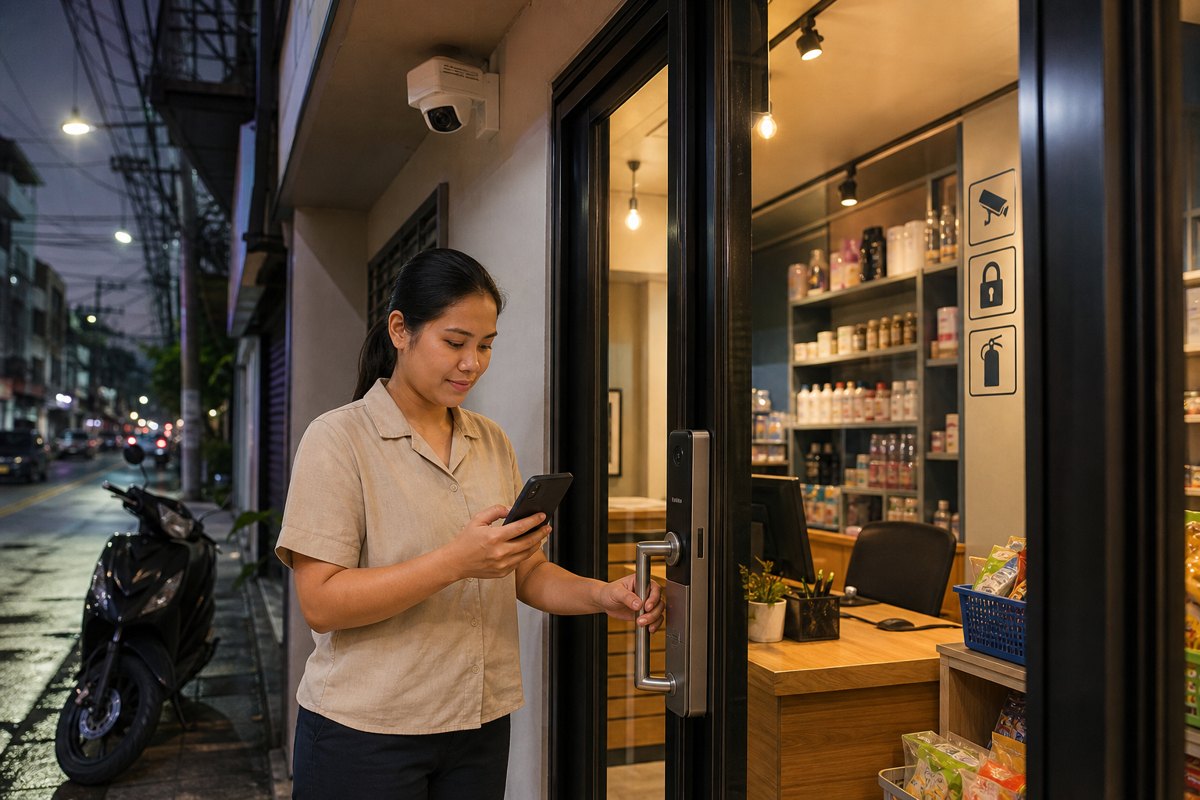
Visitor access has become one of the most important everyday security concerns for Metro Manila properties. Condominiums handle riders, contractors, guests, cleaners, couriers, and service teams throughout the day. Homes receive more online deliveries than ever. Small offices and retail shops need to welcome customers without exposing staff, inventory, or confidential areas to avoidable risk.
Quick summary: what decision-makers should prioritize
- Entry reliability matters as much as camera coverage. A camera that records but does not support fast verification leaves gaps at the door.
- Visitor access is now an operations issue. Poor entry controls can delay deliveries, distract staff, and create avoidable disputes.
- Homes and offices need layered protection. CCTV, smart locks, intercoms, access logs, lighting, and clear procedures work best together.
- The right system should fit local behavior. Metro Manila properties need practical solutions for deliveries, rainy-season conditions, shared buildings, and mixed residential-business use.
Why visitor access matters more now
Security used to be discussed mainly in terms of alarms, locks, and CCTV coverage. Those remain essential, but the real pressure point for many properties is now the entrance. The doorway, lobby, gate, reception area, or loading zone is where convenience and risk meet.
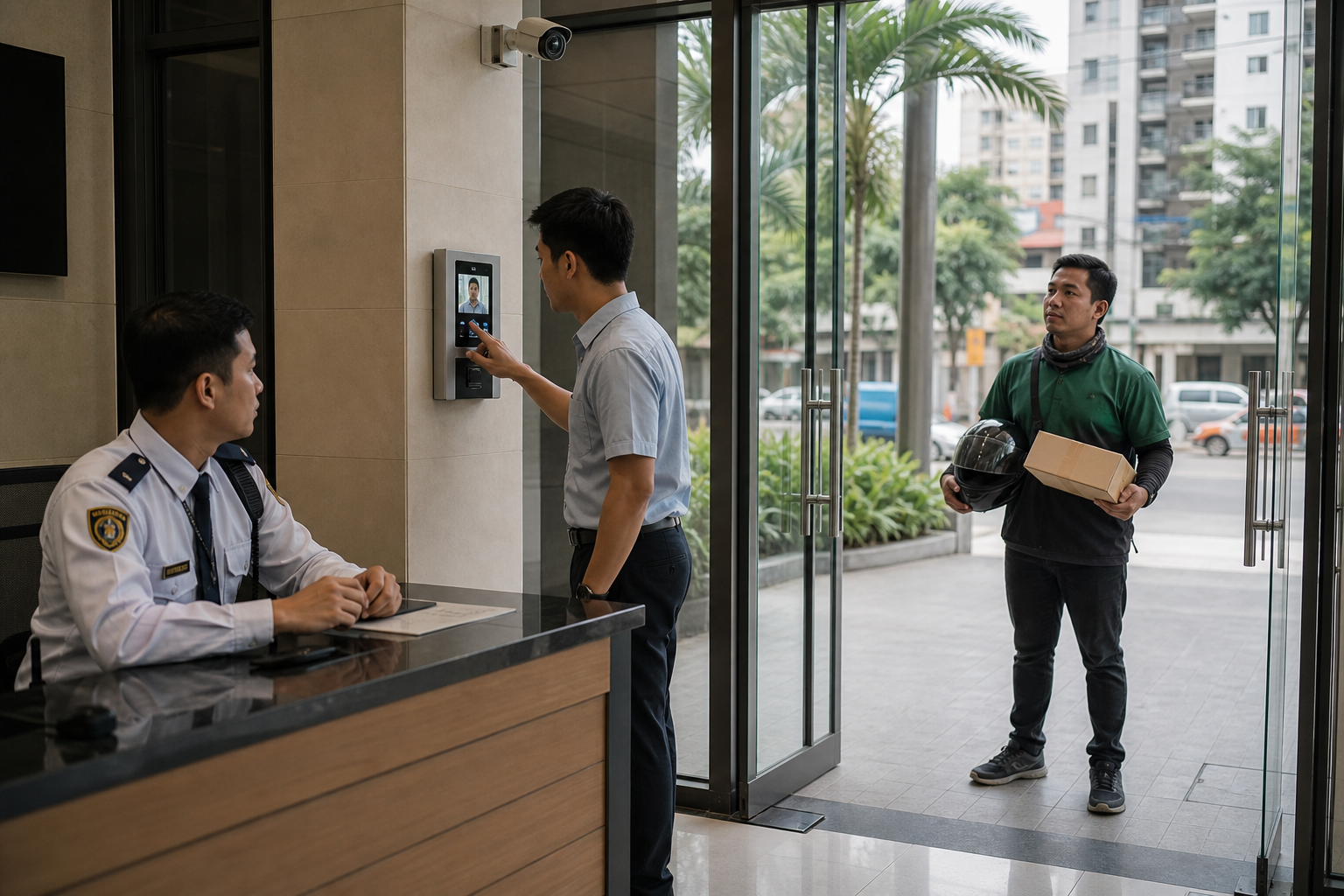
Online shopping, app-based deliveries, flexible work, short-term guests, outsourced maintenance, and shared parking have increased the number of unfamiliar people approaching homes and offices. In a busy condo, a guard may need to confirm a food delivery, a contractor, a relative, and a unit owner within the same few minutes. In a small office, the first person at the door may be an employee who is also answering calls, managing customers, or handling inventory.
This is why reliable visitor access is not only about stopping intruders. It is about making better decisions quickly: who is at the entrance, why they are there, whether they are expected, where they are allowed to go, and what record exists if an incident needs review.
Reliability is the foundation of real security
A security system is only useful when it works consistently during ordinary, messy, real-world conditions. Metro Manila properties face power interruptions, internet issues, heavy rain, crowded entrances, rotating staff, and high delivery volume. A setup that looks impressive during installation but fails during peak hours does not provide dependable protection.
Reliable visitor access should support three basic outcomes. First, the person in charge should be able to identify the visitor clearly. Second, the property should have a controlled way to approve, deny, or delay entry. Third, there should be a record that can be reviewed later without forcing staff to search through unclear footage or handwritten notes.
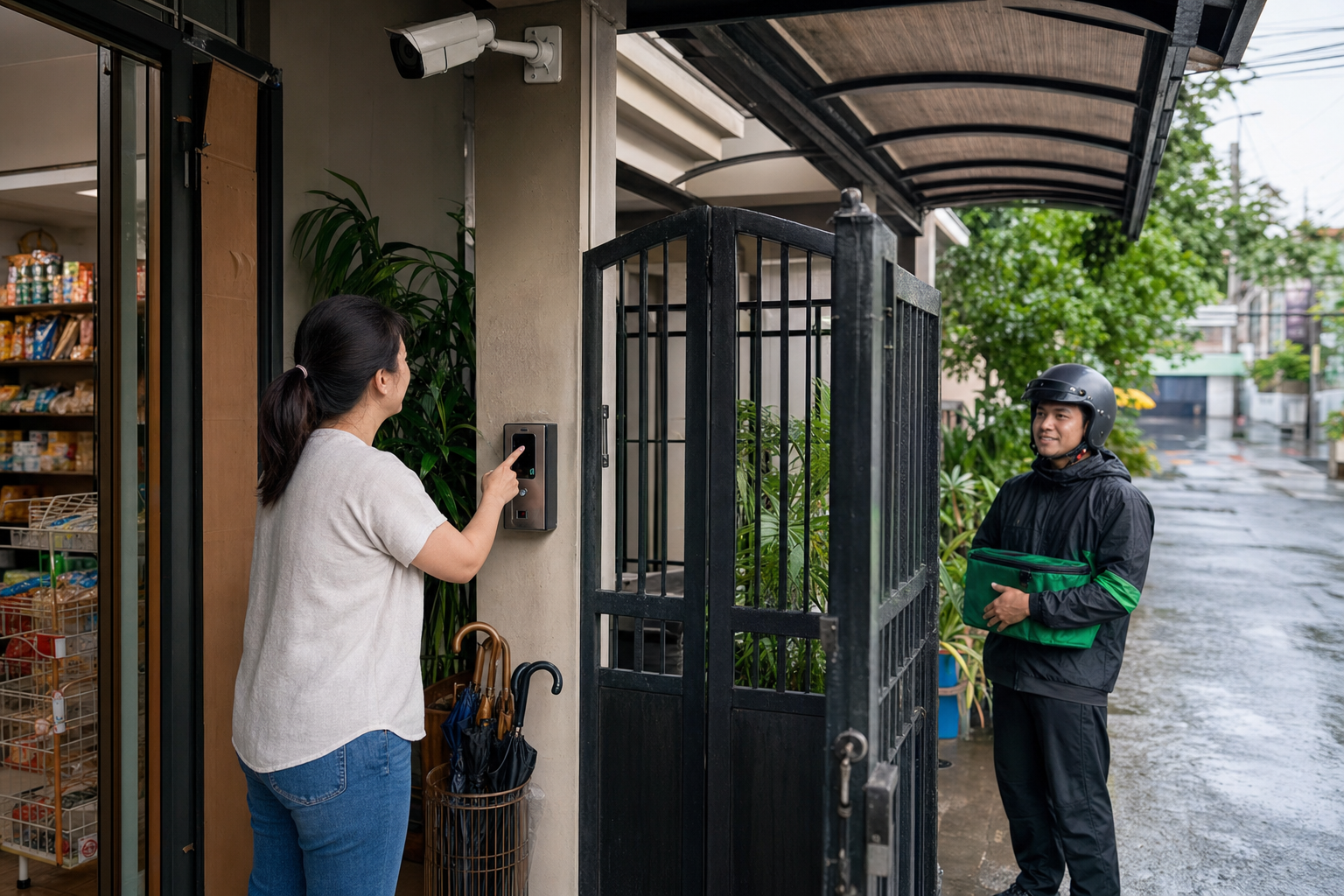
For a household, that can mean seeing and speaking with a delivery rider before opening the gate. For a condo, it may mean pairing lobby procedures with CCTV coverage, access logs, and intercom confirmation. For a small office, it can mean allowing front-desk staff to verify visitors without leaving the reception area or exposing restricted rooms.
The business case: fewer disruptions, clearer accountability
Security investments are often justified by worst-case scenarios, but the daily value is usually operational. A reliable access system reduces repeated interruptions, avoids confusion between guards and occupants, and gives managers a clearer basis for decisions.
For property managers, visitor control can reduce complaints about unauthorized access, lost packages, tailgating, and unclear responsibility. For office managers, it helps protect employees and assets while keeping legitimate visitors moving. For retail operators, it supports a safer environment for staff who may open or close the shop early, receive deliveries, or handle cash and merchandise.
Good security also protects time. When residents or employees constantly need to walk to the gate, answer uncertain calls, or manually confirm routine visitors, productivity suffers. A practical access setup creates a smoother process while keeping control where it belongs.
What a practical visitor access setup includes
The strongest approach is layered, not complicated. Each layer should solve a real problem at the property rather than adding technology for its own sake.
Clear video at the entry point
CCTV should show faces, approach direction, packages, and surrounding activity. Placement is critical. A camera mounted too high, pointed into glare, or blocked by signage may record an event without capturing useful evidence.
Two-way verification
Video intercoms, door phones, or app-connected access devices help residents and staff confirm visitors before entry. This is especially useful for households, clinics, small offices, warehouses, and buildings where the person approving access may not be beside the door.
Controlled locking and release
Smart locks, magnetic locks, electric strikes, and gate controls should be selected based on traffic volume, emergency requirements, and the physical door or gate. The goal is not simply remote opening; it is controlled opening with a clear process.
Logs and reviewable records
Access records, camera timestamps, and visitor notes help resolve disputes. They also reveal patterns, such as repeated after-hours attempts, delivery bottlenecks, or areas where staff need better procedures.
Guidance for homes, condos, and small offices
For homeowners and families, the most useful systems are simple enough for daily use. A gate camera, video doorbell, smart lock, or intercom can help protect children, helpers, elderly family members, and deliveries without requiring everyone to be security experts.
For condominiums and managed buildings, the priority is coordination. Lobby guards, residents, admin staff, and property managers need a shared process. Technology should reduce judgment calls, not create new confusion. Camera views, visitor logs, elevator or floor access rules, and delivery holding areas should support the same policy.
For offices and retail spaces, visitor access should protect both people and operations. Reception areas, stock rooms, back offices, cash points, server cabinets, and employee-only areas should not depend on a single unlocked door. Even a small business can benefit from controlled entry, clear camera coverage, and an incident review process.
Practical decision checklist
- Map your visitor types: residents, employees, clients, riders, suppliers, contractors, cleaners, and emergency services.
- Identify the most vulnerable entry points: gates, lobby doors, parking access, service entrances, stairwells, and delivery areas.
- Check image quality at real times of day: morning glare, evening darkness, rain, and peak traffic can change what cameras capture.
- Define who can approve access: avoid informal arrangements that depend on whoever happens to answer first.
- Plan for downtime: confirm backup procedures for power, internet, device failure, and staff turnover.
- Choose systems that can scale: today’s single gate may become tomorrow’s multi-door, multi-camera, multi-user environment.
Common mistakes to avoid
One common mistake is buying devices separately without considering how they work together. A camera, lock, and intercom may each function on its own but still fail to create a dependable access process. Another mistake is focusing only on the main entrance while ignoring parking, service doors, and side gates where incidents often occur.
Some properties also underestimate training. If guards, staff, residents, or family members do not know when to deny entry, how to verify a visitor, or how to review footage, the technology cannot deliver its full value. Good implementation includes clear rules, usable controls, and practical documentation.
Reliable security supports peace of mind and continuity
The best visitor access systems are not disruptive. They quietly make everyday decisions safer, faster, and more accountable. They help families feel more confident at home, support property managers in enforcing building rules, and allow businesses to operate with fewer security distractions.
In Metro Manila and nearby areas, where residential, commercial, and delivery activity often overlap, entry-point reliability is now a practical requirement. Properties that modernize their access control are better prepared for daily operations, unexpected incidents, and future growth.
Plan a security setup that fits your property
Infotouch can help homeowners, offices, building administrators, and business owners design practical security solutions for real Philippine environments, from CCTV and video intercoms to smart locks, access control, and integrated safety systems.
Whether you are upgrading a condo lobby, improving a family home gate, or securing a small office or retail shop, our team can help you assess entry risks and choose reliable technology that supports everyday operations.