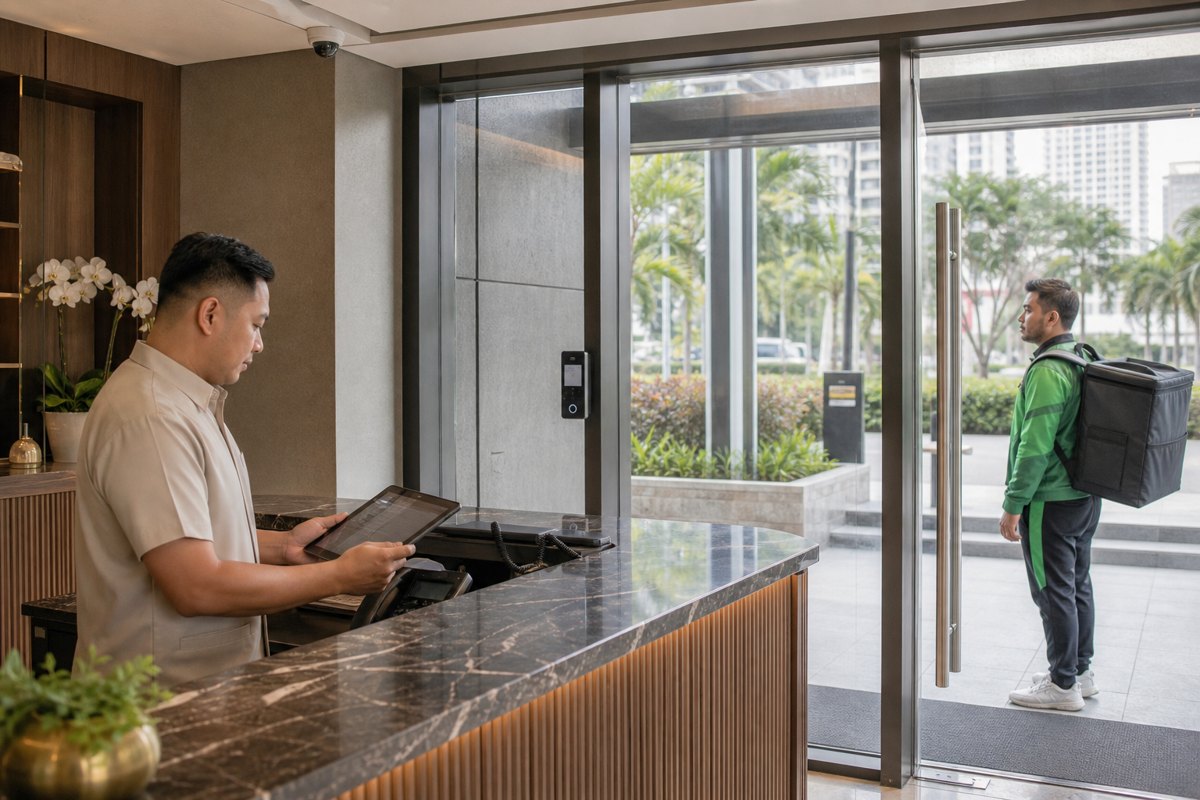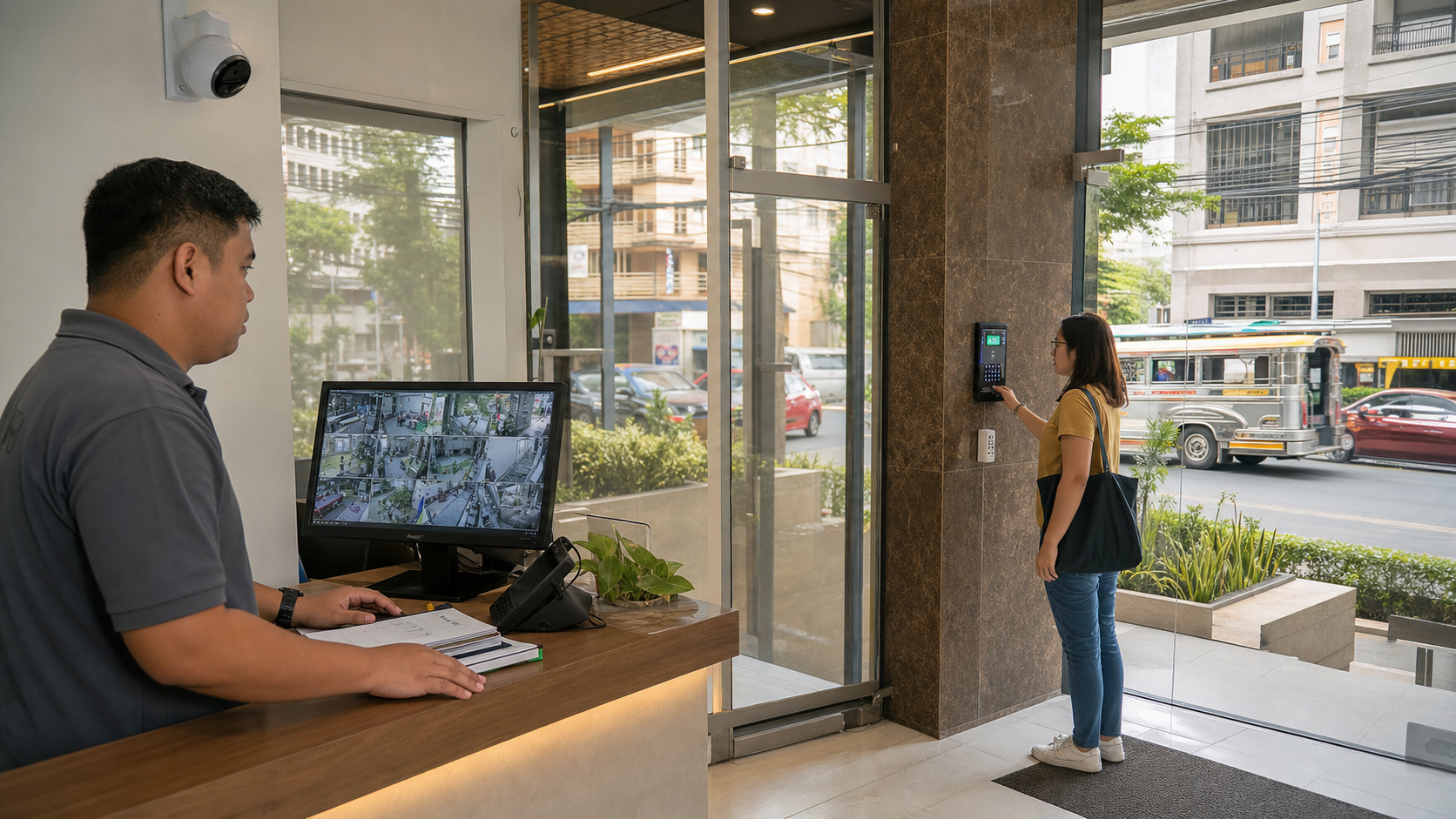
Security for homes, offices, and managed properties in Metro Manila is no longer a simple question of installing a camera and hoping it records when needed. Families, office managers, and business owners now depend on security systems to support everyday continuity: safe access for staff and visitors, evidence when incidents occur, protection during rainy-season disruptions, and confidence when sites are managed remotely.
Quick summary: what decision-makers should prioritize
- Reliability first: choose security systems that continue working during power, network, weather, and human-process disruptions.
- Integrated protection: combine CCTV, access control, alarms, sensors, storage, and user permissions instead of relying on one device type.
- Operational value: use security not only to deter incidents, but also to improve accountability, response time, visitor management, and business continuity.
- Scalable design: plan for homes, offices, warehouses, clinics, and mixed-use properties that may expand or change usage over time.
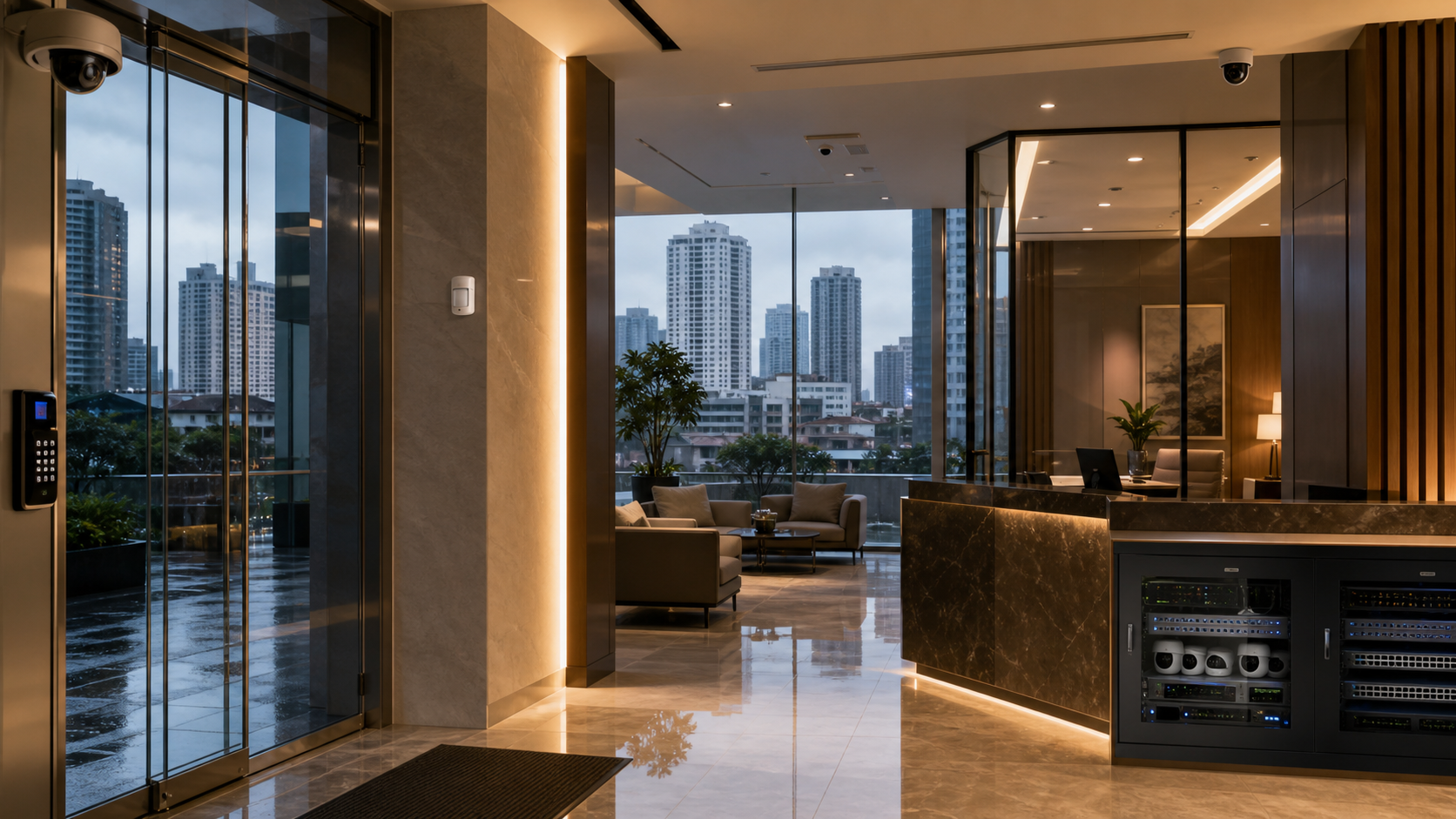
Why security reliability matters more now
Metro Manila properties are becoming more connected, more mobile, and more dependent on digital operations. Many households manage deliveries, helpers, contractors, children, elderly family members, and remote-work schedules from the same address. Offices are handling hybrid work, flexible shifts, third-party vendors, after-hours maintenance, and valuable IT assets. Property managers must monitor shared spaces without being physically present all day.
In this environment, a security system is part of the property’s operating infrastructure. If it fails during an outage, stores only partial footage, sends too many false alerts, or cannot identify who entered a restricted area, the result is not just inconvenience. It can affect safety, insurance documentation, employee confidence, customer trust, and the ability to make fast decisions after an incident.
Reliability also matters because modern risks are not limited to break-ins. Decision-makers now need visibility over unauthorized access, package loss, workplace disputes, vandalism, equipment damage, perimeter movement, fire and environmental alarms, and unusual activity in parking areas or common corridors. A strong system provides useful evidence and fast notification without overwhelming the people responsible for the site.
From standalone devices to a dependable security ecosystem
A common mistake is to treat security as a collection of separate purchases: a few cameras, a door lock, a basic alarm, and maybe a recorder. That approach can work for simple monitoring, but it often fails when an incident requires a clear timeline. The better approach is to design a connected security ecosystem where every component supports the others.
For a home, this may mean clear camera coverage at entrances, a dependable smart lock or access control point, motion sensors in strategic zones, and secure remote viewing for family decision-makers. For an office, it may mean entry logs, reception-area surveillance, server room restrictions, visitor procedures, alarm notifications, and retention policies for recorded video. For a warehouse or property site, it may include perimeter cameras, loading-bay monitoring, flood-prone area checks, and role-based access for guards, supervisors, and administrators.
The goal is not to make the site feel complicated. The goal is to make protection practical. The right setup gives authorized people access when they need it, alerts the right team when something changes, and preserves records in a way that can be reviewed quickly and responsibly.
Protection, peace of mind, and continuity for homes
For homeowners and families, reliable security is about more than crime prevention. It supports the everyday rhythm of the household. Parents may want to confirm that children arrived safely. Families may need to coordinate deliveries or service providers. Elderly relatives may need safer entry processes. Home-based professionals may need to protect work equipment and confidential documents.
Reliability is especially important when the home is unoccupied, during travel, or when multiple people have access. A well-planned system reduces uncertainty by providing controlled entry, event-based alerts, and recorded evidence. It also helps avoid overreaction: instead of relying on rumors or incomplete information, families can review what actually happened.
Good home security should be easy to use but difficult to bypass. Cameras should be placed where they capture meaningful activity without invading private areas. Access controls should support practical routines while limiting unnecessary key duplication. Alerts should be configured to reduce false alarms, because a system that constantly interrupts users is eventually ignored.
Operational continuity for offices and managed properties
For businesses, reliable security supports productivity and governance. Office managers need to know whether doors were locked, who entered sensitive rooms, whether deliveries were received, and how incidents unfolded. Business owners need confidence that assets, people, and data-related areas are protected even when they are away from the site.
Security also affects workplace professionalism. A clear access process improves visitor experience. Visible but well-positioned cameras reinforce accountability. Documented entry logs help resolve disputes. Networked systems can reduce dependence on manual reporting and make supervision more consistent across locations.
For property managers and facility teams, the value is even broader. Security systems help coordinate guards, maintenance personnel, tenants, contractors, and emergency response. When footage and access logs are available quickly, teams can avoid guesswork and respond with evidence. That is important for condominiums, small commercial buildings, clinics, schools, retail spaces, warehouses, and multi-tenant offices.
What makes a system dependable in real-world conditions
Dependability comes from planning for the conditions that actually affect Metro Manila properties. These include power interruptions, internet instability, heavy rain, humidity, high-traffic entrances, limited IT support, and changing user permissions. A system that looks impressive on paper but fails under these conditions will not deliver the protection expected from it.
Decision-makers should look for several reliability factors. The system should have appropriate backup power for critical devices. Cameras and recorders should be matched to the environment, including lighting, weather exposure, and viewing distance. Storage should be sized according to the required retention period and image quality. Remote access should be secure, not dependent on weak passwords or shared accounts. Users should have clear roles so that administrators, guards, family members, and managers only access what they need.
Maintenance is another key factor. Lenses become dirty, cables loosen, firmware ages, and network settings change. A professional setup includes documentation, testing, and periodic review. Security is not a one-time installation; it is a managed capability.
Smarter security without unnecessary complexity
Modern systems can offer video analytics, mobile alerts, cloud backup, access schedules, and integrations with alarms or sensors. These tools can be valuable, but only when they are configured around real operational needs. A small office does not need unnecessary complexity. A larger facility should not rely on consumer-grade shortcuts. The best solution is one that matches risk, budget, site layout, and the people who will use it every day.
For example, a family may need simple mobile access and dependable entry-point coverage. A professional office may need separate access levels for staff, executives, cleaners, and contractors. A property manager may need a central view of multiple entry points and common areas. A business with valuable equipment may need stronger retention, clearer night visibility, and restricted access to storage or IT rooms.
The practical advantage is better decision-making. Reliable security gives owners and managers the information they need before, during, and after an event. It helps prevent small issues from becoming larger disputes or losses.
Practical checklist for choosing a reliable security setup
1. Map the real risks
Identify entrances, blind spots, shared areas, storage rooms, reception points, parking spaces, and locations where incidents or disputes are most likely to occur.
2. Define who needs access
Separate access for owners, family members, employees, guards, tenants, contractors, and administrators. Avoid shared accounts where accountability matters.
3. Plan for outages and poor connectivity
Ask how recording, alarms, access controls, and remote viewing behave when power or internet service is interrupted.
4. Set retention and evidence requirements
Decide how long footage should be stored, who can retrieve it, and what image quality is needed for identification and incident review.
5. Review maintenance and support
Choose equipment and installation partners that can support testing, documentation, updates, troubleshooting, and future expansion.
Decision point: if a security system cannot answer who entered, what happened, when it happened, and whether evidence is available, it may not be reliable enough for today’s home, office, or property-management needs.
Build security that supports confidence every day
The strongest security systems are not necessarily the most complicated. They are the ones that keep working, fit the site, support the people responsible for safety, and provide clear information when decisions need to be made quickly. For Metro Manila homes and offices, that reliability is becoming essential.
Talk to Infotouch about reliable home and office security
Infotouch helps homeowners, businesses, and property teams plan practical security solutions that match real-world requirements—from CCTV and access control to integrated monitoring, storage, and support. If you are upgrading a home, office, building, or managed property, Infotouch can help you design a dependable setup that protects people, assets, and continuity.