
Homes and offices are under the same pressure now: they need to stay safe, stay operational, and stay easy to manage. A family wants peace of mind at the front door, in the driveway, and around the property. A business wants clear visibility at entrances, parking areas, receiving zones, and common spaces. At the same time, more households and workplaces are asking whether electric vehicles can fit into everyday life in a practical way.
The useful connection is simple. Reliable security and safety systems protect people, property, and time. EVs, when planned well, can reduce fuel costs, simplify charging, and support a cleaner, quieter way to move. Neither topic is about hype. Both are about infrastructure that makes daily life easier, safer, and more resilient.
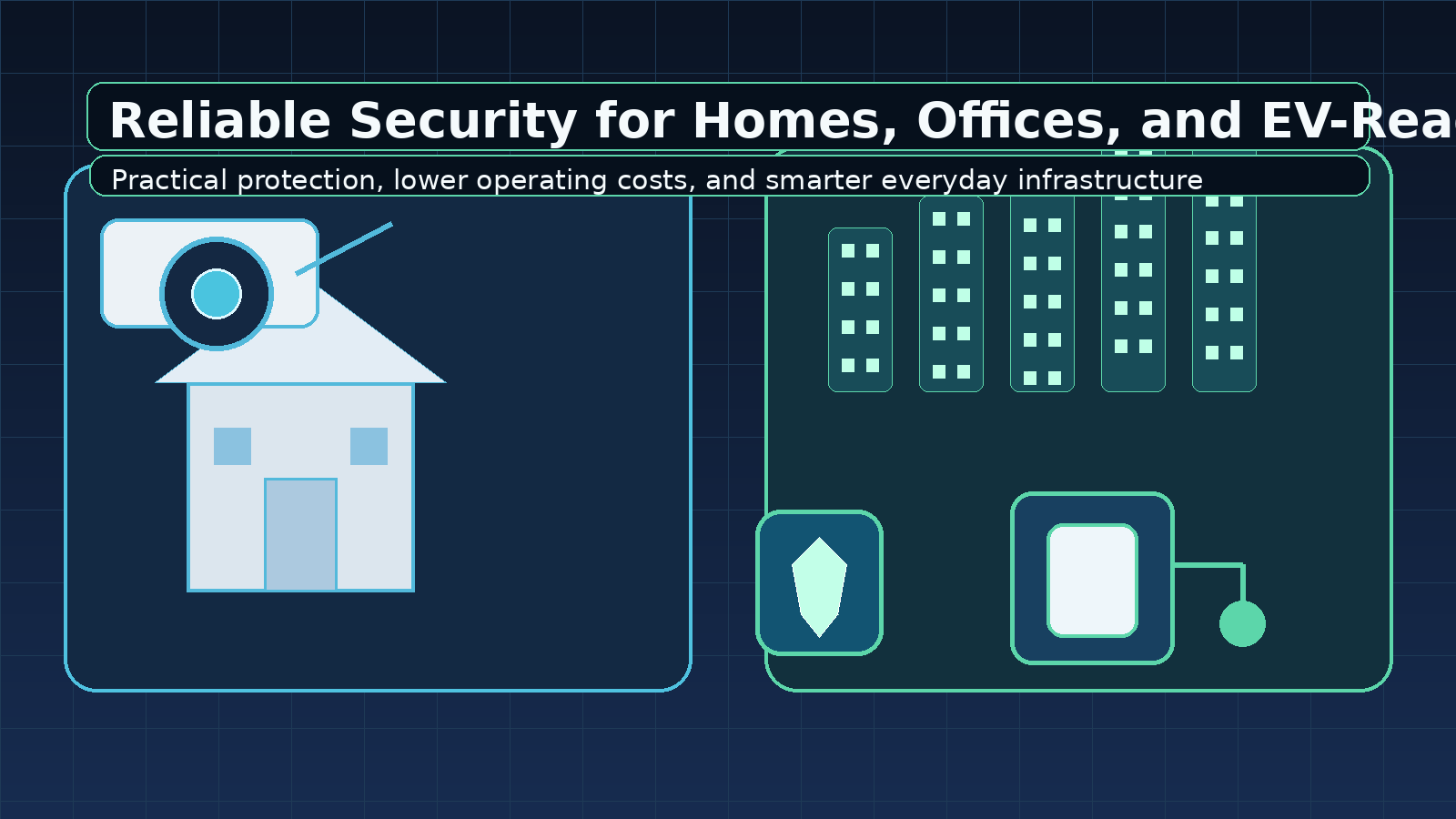
Why reliable home and office security matters now
For homes, security is not just about stopping theft. It is also about knowing who is at the gate, whether delivery people reached the right place, whether the garage and side access points are visible, and whether the family can respond quickly to unusual activity. For offices, security supports continuity: staff can work confidently, visitors can be managed properly, and managers can review incidents without guessing.
Modern security systems are more useful when they are reliable instead of decorative. That means cameras that actually cover the critical points, storage that keeps footage long enough for real review, remote viewing that works when nobody is on site, and access controls that are easy to manage. The best systems reduce uncertainty. They give property owners a clearer picture of what is happening, not just a pile of recordings.
In many cases, the value is operational. A business spends less time searching for footage. A homeowner gets faster answers after a delivery issue or suspicious visit. A building manager can show evidence when a tenant or supplier asks what happened. Security only feels expensive when it is poorly planned. When it is done well, it saves time, reduces risk, and protects trust.
What dependable security and safety should include
- Clear coverage: entrances, exits, driveways, parking, gates, reception areas, storage rooms, and other high-risk zones.
- Good image quality: enough detail for day and night review, with proper camera placement and lighting.
- Useful alerts: motion or event awareness that helps people respond faster instead of watching every frame manually.
- Secure access: strong passwords, controlled user permissions, and safe remote viewing options.
- Maintenance discipline: firmware updates, storage checks, camera cleanup, and periodic review of coverage and retention.
These basics matter because safety is now part of everyday operations. Homes have more deliveries, more devices, and more activity. Offices have more visitors, hybrid routines, and more pressure to prove accountability. Reliable security is no longer a luxury feature. It is part of how modern properties function.
Why EVs are increasingly attractive today
Electric vehicles are gaining ground for a simple reason: the benefits are becoming practical, not theoretical. Owners are looking at lower running costs, less dependence on fluctuating fuel prices, easier home or workplace charging, and reduced routine maintenance. For many people, the draw is not image or performance. It is everyday convenience.
For homeowners, the appeal includes overnight charging and a more predictable daily routine. For office buildings and business properties, EV charging can improve employee convenience and support tenant value. For fleet operators, EVs can reduce fuel dependency and help planning teams better understand total operating costs. In a market where cost control matters, those advantages are meaningful.
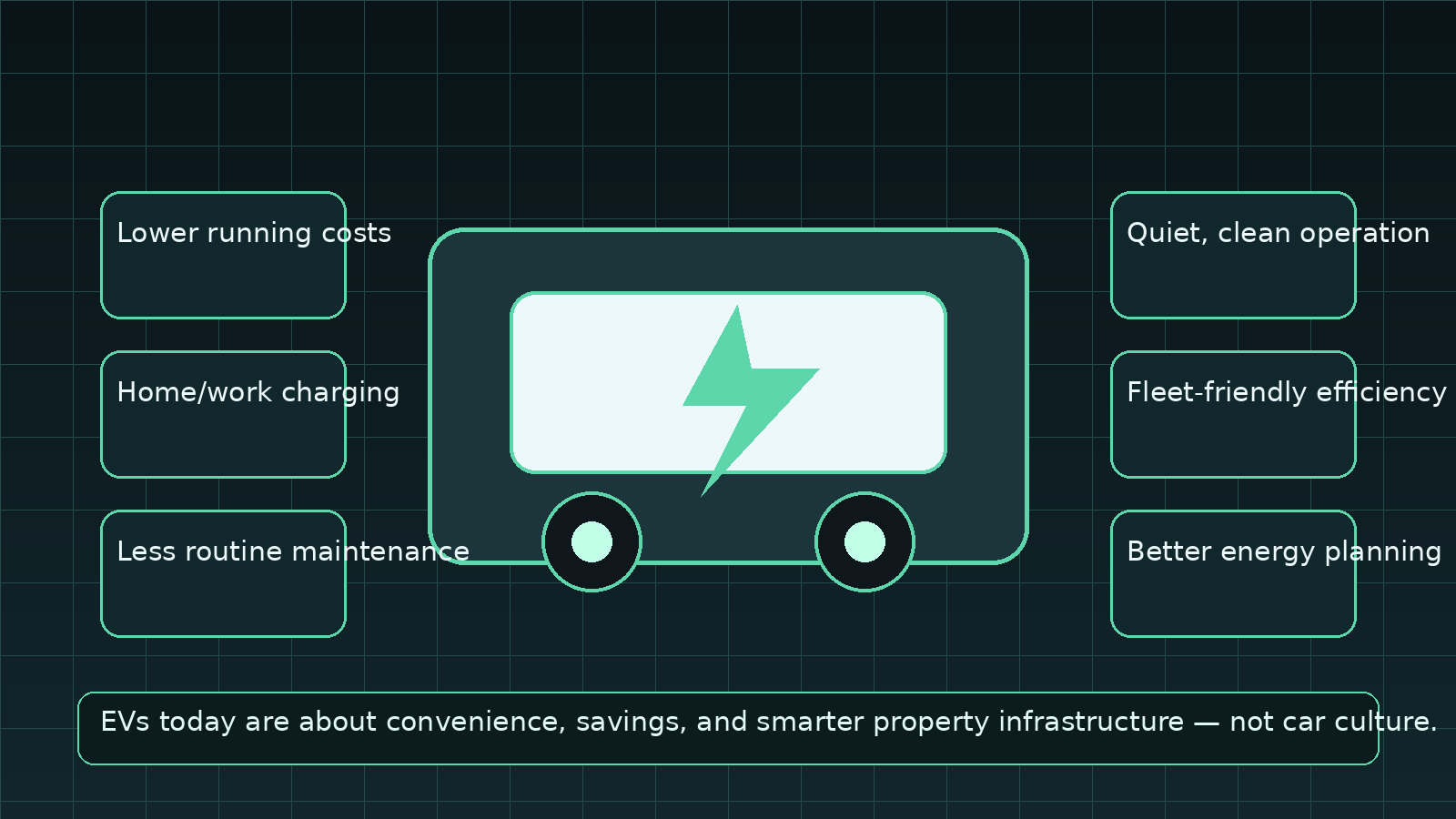
EVs also fit a broader property strategy. A modern home or office that already thinks about energy, access, safety, and connectivity is better prepared for charging infrastructure. The same discipline used for reliable security applies here: assess the site, understand power needs, plan the layout, manage access, and keep the system easy to use.
There are also community-wide benefits that matter to decision-makers. Quieter operation can improve the feel of residential streets and business campuses. Fewer moving parts can simplify routine maintenance planning. And for organizations with sustainability goals, EV adoption can support cleaner operations without requiring a dramatic change in how employees or fleets function day to day. That makes the transition easier to justify.
How security and EV planning connect
These two topics may seem separate, but they share a common lesson: good infrastructure should make life simpler. A secure property reduces stress and confusion. A well-planned EV setup reduces charging friction and helps people adopt cleaner transport without daily hassle. Both require thoughtful placement, dependable equipment, and a realistic view of how the space is actually used.
That is why homeowners, office managers, facility teams, and property owners should think in systems rather than devices. A camera alone is not a security plan. A charger alone is not an EV strategy. The value comes from the design behind them: the way they fit the building, the network, the users, and the daily operating routine.
When both are planned together, the result is a property that feels more modern and easier to manage. Security supports confidence. EV readiness supports convenience. Each one helps the other by making the site more orderly, more predictable, and more attractive to the people who use it every day.
A practical next step for decision-makers
If you are reviewing your home or office this year, start with three questions: Which areas need better security visibility? Which parts of the property would benefit from safer, easier access? And if EVs are part of your future, where would charging fit naturally without disrupting the site?
For many properties, the answer is to improve the basics first: camera coverage, secure remote access, clear storage, and reliable power planning. From there, EV charging can be added in a way that feels orderly rather than improvised. That is the kind of upgrade that lasts.
One final point is worth remembering: the best time to plan is before a problem forces the decision. A property that is safe, observable, and ready for modern energy use will always be easier to manage than one that is patched together later. That is true for a home, an office, and any space where people depend on reliability.
Need help planning security, safety, or EV infrastructure? Infotouch can help you assess the property, identify the best coverage or charging locations, and recommend a setup that fits real use. Contact the team through the Infotouch contact page or call +63 918 967 6718 to discuss next steps.