
Electric vehicles are moving from early-adopter curiosity to practical infrastructure planning for homes, offices, and managed properties across Metro Manila. For many decision-makers, the most important question is no longer whether EV technology is modern enough. It is whether their property, daily routine, and operating model are ready to capture the benefits that EV ownership can already deliver today.
This matters now because transportation costs, power management, employee mobility, sustainability expectations, and customer convenience are converging. Families want more predictable daily running costs. Office managers want amenities that support staff and visitors without disrupting operations. Business owners and fleet managers want cleaner, easier-to-track mobility expenses. Property managers want facilities that stay relevant as tenants and homeowners gradually shift to electric transport. In that environment, EV readiness becomes less about lifestyle and more about operational advantage.
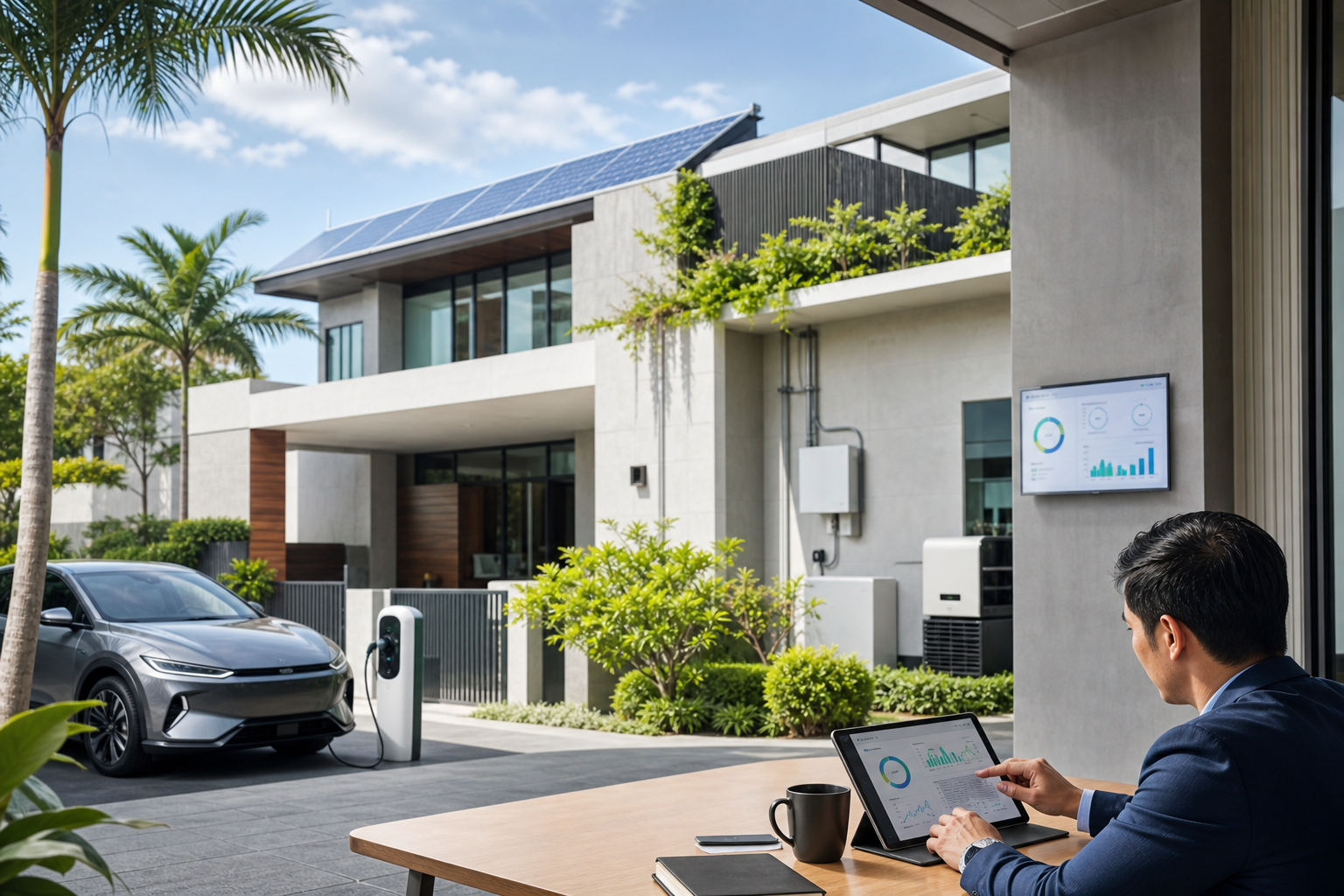
The practical value of charging where people already live and work
The strongest EV advantage is convenience. When charging is available at home, in an office parking area, or at a managed property, the vehicle can be replenished during normal downtime instead of requiring a separate trip. A homeowner can charge overnight. An employee can top up during the workday. A service team can return vehicles to base and start the next morning with a predictable range. This changes EV use from a special task into part of the normal operating rhythm.
For Metro Manila users, that convenience can be especially valuable. Daily schedules are often affected by traffic, parking constraints, school runs, client visits, and building access requirements. A property that provides safe, well-managed charging reduces friction for residents, employees, and guests. It also helps avoid informal charging practices, extension-cord risks, and ad hoc electrical loading that can create safety and maintenance problems.
Cost control is becoming a boardroom and household issue
EVs can support better cost control because electricity use is easier to monitor, allocate, and plan than many traditional fuel expenses. For families, the benefit is clearer budgeting for daily transport. For companies, the advantage is stronger visibility: charging sessions can be logged, usage can be assigned to departments or vehicles, and policies can be created for employee, visitor, or fleet charging.
The savings discussion should be handled professionally. Actual cost advantages depend on electricity rates, driving patterns, battery size, charging speed, vehicle efficiency, and whether charging happens at home, at the office, or on public networks. But the management principle is consistent: a planned charging setup gives owners better control than a reactive approach. It allows decision-makers to set schedules, avoid unnecessary peak loading where possible, compare energy use across vehicles, and identify waste early.
For small businesses, even a modest reduction in recurring mobility costs can matter. Sales teams, maintenance teams, delivery operations, and executive transport all depend on reliable movement. If EVs are introduced without proper charging governance, the organization may experience confusion over access, reimbursement, electrical capacity, and accountability. If they are introduced with a structured plan, EVs can become a cleaner and more measurable operating expense.
Sustainability now has practical business value
Sustainability is no longer just a branding statement. Many organizations are being asked by customers, landlords, suppliers, and employees to demonstrate responsible operations. EV adoption can support that direction, particularly when paired with efficient charging practices, energy monitoring, and long-term facility planning. For residences and condominiums, EV-ready infrastructure also signals that the property is prepared for changing homeowner expectations.
For offices, clinics, retail locations, warehouses, and mixed-use properties, EV charging can also become a service feature. It supports employees who already use EVs, assists visitors who need top-up charging, and prepares the property for future fleet or service vehicle electrification. The benefit is not only environmental. It is competitive: properties that plan earlier can offer a smoother experience than sites that wait until demand becomes urgent.

Fleet and workplace use require more than a socket
For businesses, the EV conversation should not start with the charger alone. It should start with use cases. How many vehicles may charge at the same time? Who is allowed to use the equipment? Will charging be free, billed, reimbursed, or restricted? Should the system support scheduling, load balancing, remote monitoring, or access control? How will the company handle visitors, tenants, employees, and service vehicles with different needs?
These questions are important because unmanaged charging can create avoidable issues: overloaded circuits, unclear responsibility for energy costs, parking conflicts, equipment misuse, and downtime when a unit fails. A professional approach considers electrical capacity, panel limitations, cable routing, weather protection, safety devices, user authentication, maintenance access, and future expansion. It also documents rules so the system can be managed consistently.
A facility manager, for example, may begin with two chargers for executives and visitors, then later expand to support pool vehicles or tenant demand. A household may start with one dedicated charging point but should still consider safe wiring, surge protection, proper installation location, and energy monitoring. A small fleet may need scheduled overnight charging and a simple dashboard to confirm which vehicles are ready each morning. In every case, the best result comes from planning the whole operating environment, not just installing hardware.
What decision-makers should evaluate before investing
Before approving an EV charging project, homeowners and businesses should review five practical areas. First is electrical readiness: available capacity, safe circuit design, proper protection, and room for expansion. Second is user demand: who will charge, how often, and at what times. Third is operational control: scheduling, access permissions, usage records, payment or reimbursement policy, and support responsibilities. Fourth is safety and compliance: qualified installation, appropriate equipment, emergency procedures, and routine inspection. Fifth is scalability: whether today’s installation can support tomorrow’s additional vehicles, tenants, or business requirements.
This evaluation helps avoid underbuilding, overbuying, or creating a system that is difficult to manage. The right solution for a private home may be simple and focused on safe daily convenience. The right solution for an office or commercial property may require multiple charging points, controlled access, signage, monitoring, and a maintenance plan. The right solution for a fleet may prioritize uptime, energy tracking, and predictable charging windows.
A modern property strategy, not a one-time purchase
EV adoption will continue to mature, but the practical advantages are already clear for users who prepare properly. Charging at home and work saves time. Managed energy use improves cost visibility. Sustainable mobility supports corporate and community expectations. Well-planned facilities reduce risk and preserve flexibility as demand grows. For Metro Manila homes, offices, and managed sites, EV readiness is becoming part of modern property infrastructure.
The most successful projects will be the ones that connect technology with real operating needs. That means choosing equipment carefully, installing it safely, managing access clearly, and designing with expansion in mind. EVs are not just a change in how people drive; they are a change in how homes, offices, and businesses manage energy, convenience, and mobility.
Infotouch can help homeowners, office managers, and business decision-makers plan practical technology environments that support safety, reliability, connectivity, and future-ready operations. If your property or organization is evaluating EV charging readiness, smart infrastructure, or integrated technology upgrades in Metro Manila and nearby areas, contact Infotouch to discuss a solution designed for real daily use—not just today’s requirement, but tomorrow’s growth.