
Security camera projects in Metro Manila are entering a different buying cycle in 2026. For years, many companies treated CCTV as a recording tool: install cameras, connect them to an NVR, and review footage only after an incident. That approach is becoming too slow for offices, warehouses, stores, parking areas, residential buildings, and mixed-use facilities that now operate with leaner teams, more delivery activity, hybrid work patterns, and higher expectations for safety.
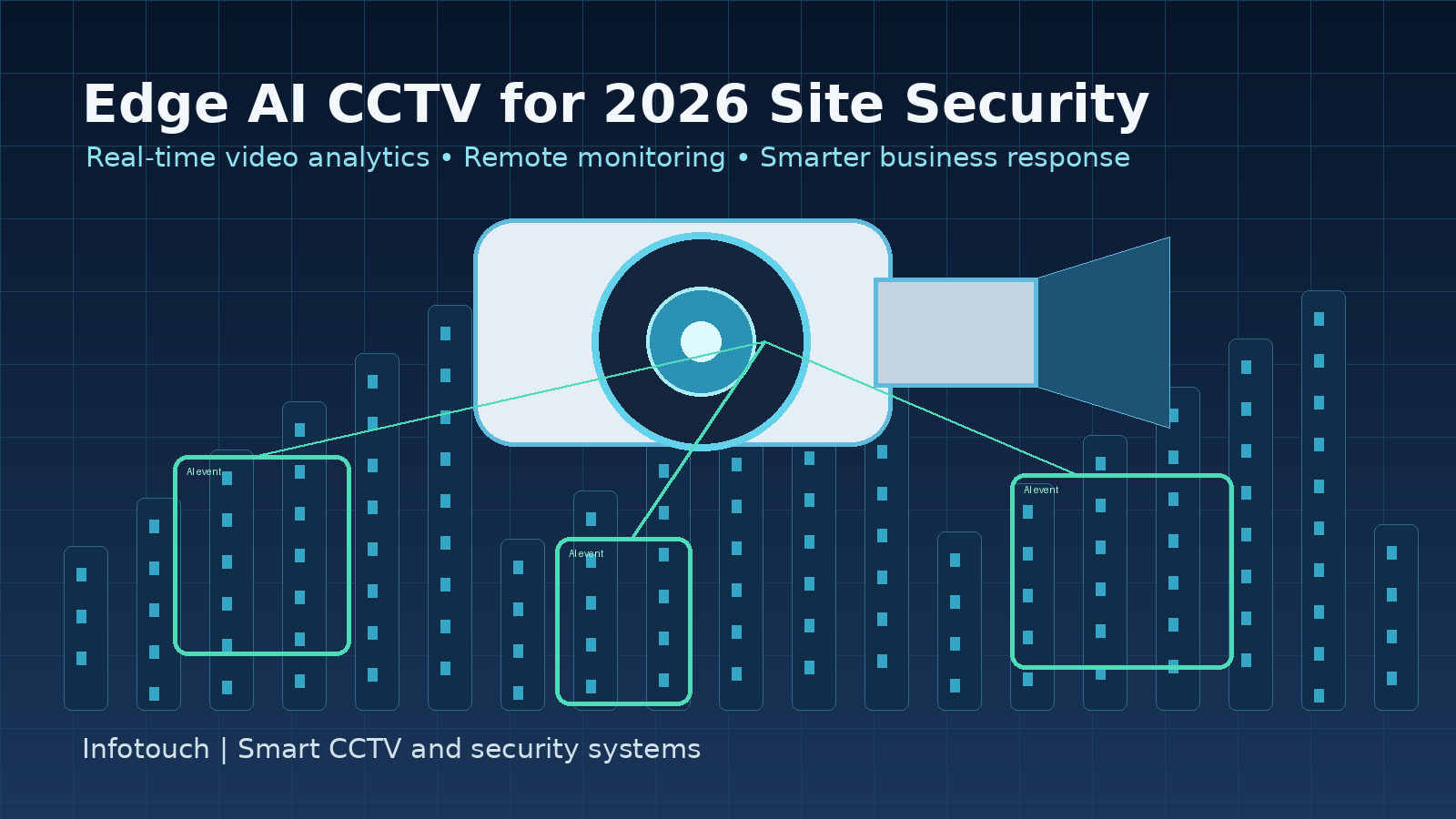
The current market movement is toward edge AI CCTV: cameras and video systems that can detect people, vehicles, intrusion patterns, line crossings, loitering, crowding, and unusual activity closer to where the video is captured. Recent surveillance trend reports from major industry vendors and security publications point to the same direction: AI, cloud-connected management, cybersecurity, and unified monitoring are becoming central to modern video surveillance decisions. For Philippine businesses, the practical question is no longer “Do we need cameras?” It is “Can our camera system help us respond before a small event becomes a business disruption?”
Why edge AI CCTV matters now
Traditional CCTV depends heavily on human review. If a security guard is watching several screens, important movement can still be missed. If footage is reviewed only after theft, trespassing, equipment damage, or a safety incident, the business has already absorbed the impact. Edge AI changes the value of cameras by adding event awareness at the device or local system level. Instead of recording every moment with equal priority, the system can highlight activity that deserves attention.
This is timely because business sites have become more operationally complex. Warehouses need to monitor receiving areas, loading bays, stock rooms, and after-hours movement. Retail stores need better visibility over entrances, cashier areas, display shelves, and staff-only zones. Offices and shared buildings need safer access points, visitor movement review, and clearer documentation when incidents are reported. Property managers need camera systems that support multiple stakeholders without creating unnecessary privacy or access risks.
Edge AI CCTV also responds to a staffing reality. Many companies cannot simply add more guards or assign managers to watch video feeds all day. Analytics can help teams focus on exceptions: a person entering a restricted corridor, a vehicle stopping in a sensitive driveway, repeated movement near a perimeter, or a camera view that is blocked. The goal is not to replace people. The goal is to give people better signals, faster review, and a more reliable operating picture.
The business risks of staying with basic recording only
Basic CCTV can still be useful, but it creates gaps when the business expects modern outcomes from an old design. One common risk is delayed discovery. A warehouse may only learn about missing inventory after reconciliation. A store may notice suspicious behavior only after checking sales discrepancies. A building administrator may discover that an entry camera was poorly angled when a tenant asks for footage. In each case, the system technically recorded video, but it did not support timely action.
Another risk is poor evidence quality. AI analytics are only as good as the video they receive. Cameras placed too high, too far, against glare, or without proper night visibility may produce footage that is difficult to interpret. As AI becomes more common, the quality of camera planning matters more, not less. Businesses that upgrade analytics without fixing blind spots, lighting, retention rules, network reliability, and viewing workflows may be disappointed by the results.
There is also a cybersecurity angle. IP cameras, NVRs, mobile viewing apps, and cloud access are now part of the business network. Weak passwords, outdated firmware, exposed remote access, and unmanaged user accounts can turn a security system into a new risk. For IT managers, CCTV modernization should include secure configuration, network segmentation where appropriate, controlled access, and clear responsibility for updates and account management.
Where Metro Manila businesses see the most value
The strongest use cases are the ones tied to operational outcomes. For a warehouse in Parañaque, Pasig, Caloocan, or nearby logistics corridors, AI-enabled cameras can help monitor loading activity, unauthorized after-hours movement, and vehicle presence near gates. For a retail location in a mall or commercial strip, analytics can support loss prevention, queue awareness, and faster review of customer or staff incidents. For offices in Makati, BGC, Ortigas, Quezon City, or Alabang, better camera placement and remote viewing can improve lobby, parking, server room, and common-area visibility.
Multi-site businesses may benefit even more. A company operating several branches does not want each site to become a separate, inconsistent security island. Standardized camera layouts, naming conventions, retention settings, user permissions, and remote monitoring workflows make it easier for management to compare sites and respond consistently. This is where CCTV becomes part of business continuity: when an incident happens, decision-makers can quickly understand what occurred, who needs to act, and whether operations can continue safely.
ROI is not only about preventing theft
The return on a modern CCTV upgrade is often broader than the value of a single prevented loss. Better video can reduce investigation time, support insurance or incident documentation, improve accountability around deliveries, help managers validate service disputes, and create safer routines for employees and visitors. When cameras are planned correctly, they also reduce wasted spending on devices that do not cover the right areas.
For facility and operations leaders, the practical ROI question is: how much time and risk does the current system create? If staff spend hours searching footage, if managers cannot view sites reliably, if cameras miss key areas, or if the NVR retention period is too short for real investigations, the system is not delivering full value. Edge AI and remote monitoring can improve that value when they are matched to a clear operating process.
What to evaluate before upgrading
- Critical zones: entrances, exits, cashier areas, stock rooms, gates, parking, loading bays, reception, restricted rooms, and blind spots.
- Event priorities: intrusion, line crossing, loitering, people counting, vehicle activity, object removal, blocked camera views, and after-hours movement.
- Recording design: storage capacity, retention period, NVR health, backup requirements, and whether cloud or hybrid access is appropriate.
- Viewing workflow: who can view live feeds, who can export footage, how remote access is secured, and how incidents are escalated.
- Network security: camera passwords, firmware, VLAN or segmentation needs, mobile app access, account removal, and remote access exposure.
- Privacy and compliance: signage, access control, retention limits, employee and visitor expectations, and careful placement away from inappropriate areas.
A practical modernization path
Businesses do not need to replace every camera at once. A practical approach starts with a site review. Identify the areas where incidents are most likely, where footage is weakest, and where managers need faster visibility. Then decide which cameras should be upgraded to AI-capable models, which views simply need repositioning, and whether the NVR, cabling, network, or remote viewing setup needs improvement.
For many sites, the best first step is to modernize the highest-risk zones: gates, lobbies, loading areas, stock rooms, and parking entries. From there, the business can standardize naming, permissions, recording rules, and incident review procedures. This staged approach keeps spending controlled while still improving the areas that carry the greatest operational risk.
Infotouch helps businesses plan CCTV around the property, not just the camera model. That means reviewing the spaces that need coverage, the risks the business wants to reduce, the way footage will be viewed, and whether the system should connect with access control, remote monitoring, or broader site technology. For offices, stores, warehouses, condos, and business properties in Metro Manila and nearby areas, a properly planned CCTV system can improve visibility, response, and confidence.
Next step for decision-makers
If your current CCTV system is mostly used after incidents, 2026 is the right time to review whether it can support faster detection and better business continuity. Start by listing the top five areas where better visibility would reduce risk or save management time. Then check whether your cameras, NVR, remote viewing, and access controls are designed around those priorities.
Need CCTV help? Contact Infotouch to discuss your property type, current camera setup, areas to cover, and whether you need a new installation, an upgrade, or viewing support. Call +63 918 967 6718 or visit the Infotouch contact page to request practical next steps.